
Some Days
A guest post from writer Liz McGlinchey King

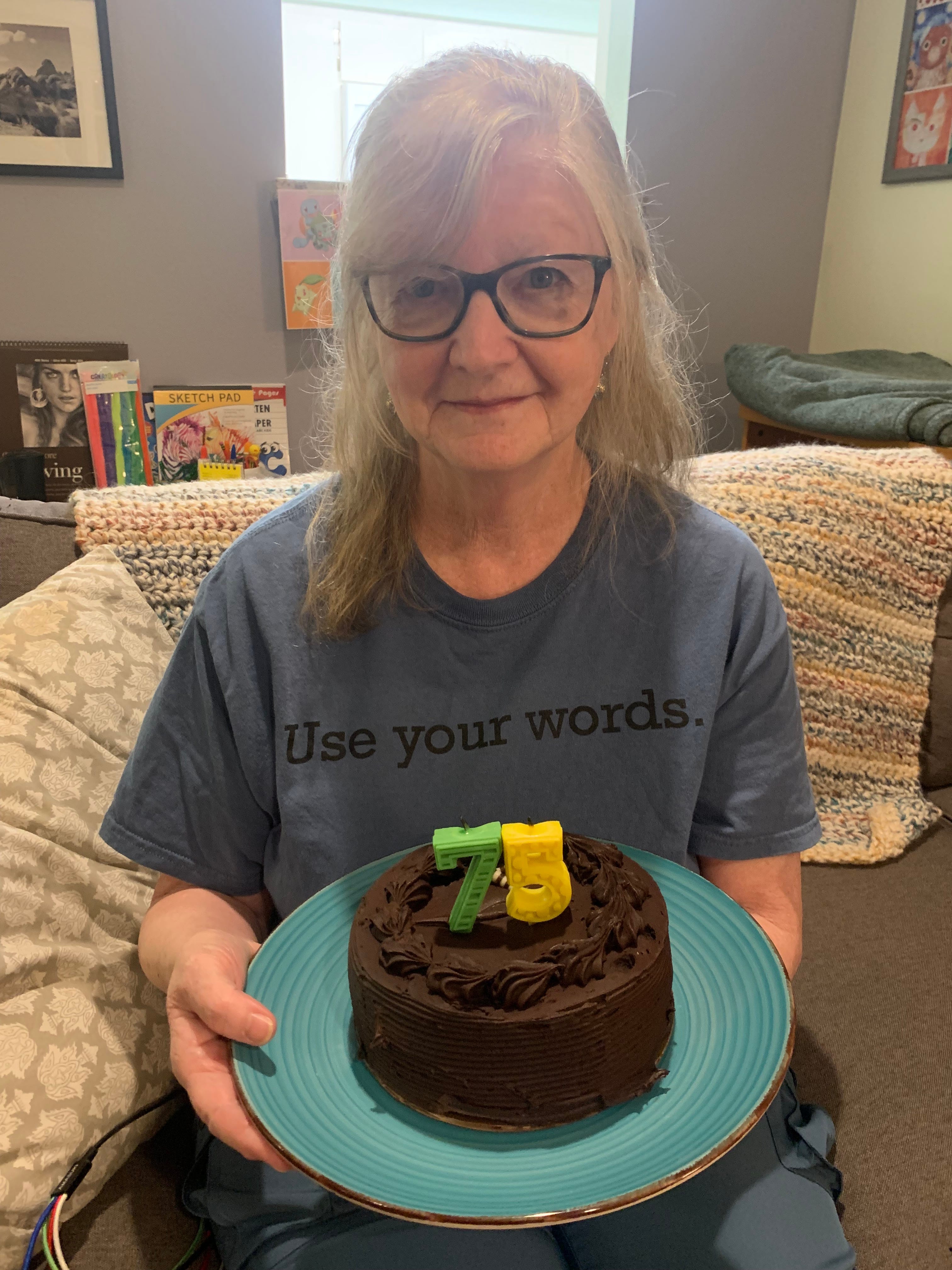
I celebrated my 75th birthday in March, and I can honestly say that I never expected to reach this decade. My parents died of cardiovascular disease in middle age, and I thought that was my destiny, too.
“Happy to be alive,” I replied to well-wishes from dozens of family members and friends.
When I turned 54, the age my mother was when she died of a massive stroke, I felt lucky. When I turned 60, my dad’s age at the time of his passing after his third heart attack, I appreciated my good fortune once again. On my 75thbirthday, I believed a miracle was upon me. I felt privileged to experience a phase of life my parents never knew.
Then my knees got the memo about my length of years. They had been achy for a while, but suddenly they decided it was time to retire. My knee joints began to protest everything I love in my life – time with my kids and grandkids, exercise class, shopping, cooking, tending to my garden, travelling the world, and date nights with my very handsome husband of 40+ years.
I started a series of doctor appointments, additional medications, physical therapy, and testing that resulted in a diagnosis of advanced arthritis.
At least I can write and play the piano sitting down, I thought, assuring myself that my body had not completely betrayed me.
My luck of longevity aside, on a recent Friday morning I woke up to a reminder that I am, in fact, an old lady - I had an appointment in Radiology for a bone density test. My husband was out of town on business, so it was just me and my thirty-something daughter, who was still asleep, at our home in Sacramento. I placed a “where I am” note on the kitchen table and left for the nearby medical center.
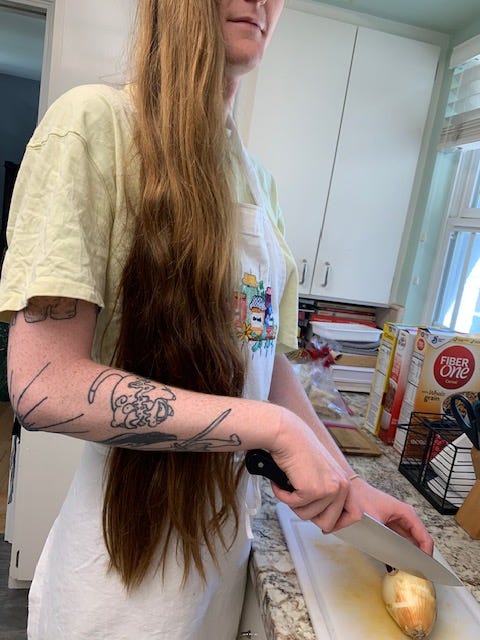
When I got home from radiology that Friday, my daughter was preparing a hot lunch. She lives with Functional Neurological Disorder (FND), a condition where the brain and body fail to send and receive signals properly. FND often presents itself with debilitating fatigue, making it hard to do life’s basic things, like cooking. It gave me comfort to see her chopping onions and garlic in my white apron with the hand-embroidered jam jars on the front. Her waist-length red hair was hanging over one shoulder of her 6’3” slender frame.
“How was the doctor’s appointment,” she asked.
“It fucking sucked. The radiology technician put my legs in an awkward position and told me not to move for several minutes at a time.” I went on to tell her about my worries. “I have a big summer planned. A Mexican cruise with your brother and his family. A visit from your cousin in New Jersey and her husband and five kids. A two-week trip to Ireland with my summer vacay cousins and my brother and his wife. I don’t want to cancel any of it.”
This kind of conversation is rare for me. I pride myself in being independent and active.
“I think I’ll go back to bed,” I told her.
I had a 1:00PM date for a phone chat with my college roommate, something we still do once a week after 45 years. I climbed into bed and iced my elevated knees while I easily fell into the connection my friend and I have had since the 1970s. We talked about our kids at great length. We compared weather reports – she lives in Vermont where the snow had recently stopped but the rain was constant, as it was in Northern California. We talked about our summer vegetable gardens – hers in her rolling hills, mine in elevated beds. I told her a little about my barely functioning knees but didn’t elaborate. We’ve had many chats about the unpleasant side of life, but on this day, I didn’t want to spoil the delightful vibe of kids and gardens. We ended our hour-long live chat as always with, “I love you.”
Then I hobbled back to the kitchen, only to find my daughter squatting down, sitting on her left foot with her right knee bent upwards, in the full throes of an FND seizure.
“Oh, sweetheart.” I gently put my arms around her and kissed her cheek. “You’re OK. You’re OK,” I repeated softly. “What can I do,” I asked.
I picked up the glass of water she was pointing to and held it up to her mouth, but she refused it. I placed the glass in her jittery hand, and she gave herself a sip, determined to maintain her dignity.
“I need to lay down,” she whispered.
“Lay down right here.” I helped her recline on her right side, curled up on the 6-foot-long foam mats I have on the kitchen floor. I went to the next room and picked up two pillows and a blanket from the couch. I placed one pillow under her head and the other between her knees, then covered her with the blanket. I sat on a chair a few feet away, feeling regret for unloading on her about my health. Physical and emotional overload can trigger an FND brain, causing the body to stiffen and collapse into a non-epileptic seizure. I was grateful that my private nature had stopped me from telling her my deepest worries.
How much time do I have left to take care of my family. How will I feel when I can no longer help them with everyday chores. Have I prepared them for the day I experienced prematurely, the day when life no longer includes the love and oversight of a caring mother. Those were the thoughts I kept to myself after my latest medical tests, and again as my adult child experienced a health crisis.
I sat there for about ten minutes before she was fully conscious and able to sit up. I continued to reassure her as she came out of the seizure, albeit with a few tears.
“It’s so hard, living with this condition,” she cried. I told her the only honest thing I could think of to say.
“Most of your days are good, full of family, friends, activities. But some days are just going to be like this.”
I finished cooking her lunch, pasta with vegan sausages, and she ate about half a serving, then she went to bed, using a cane to make her way down the hallway. She had been planning to ride along with a friend to Oakland, where she used to live. After a few seizures while alone in her rental house, one of which involved a fall down the stairs, our daughter had asked to move in with us, to which we wholeheartedly agreed.
“I’ll wait until tomorrow to go to Oakland,” she decided. I cleaned up the kitchen and noticed it was almost time to pick up my grandson from first grade, a task I alternate with his other grandmother. I left early so I could park close to the school and not have to walk too far. After two years of this routine, my heart still skips a beat every time I spot him exiting the classroom. On the drive back to my house, I love listening to his stories. Lately, the tales are mostly about his new baby brother, but on this day, he told me about something that happened at school.
“Granny, do you want to hear something really dumb? The teacher made us do this math exercise that was pointless!” He went on to describe what a waste of time it was. I chuckled at some of the words, like “pointless,” coming out of this kid.
“Most days you learn something, you play with your friends at recess. But some days are just going to be like this,” I told him. I looked in my rearview mirror and thought about what joy he was giving me on a day when I needed it.
When we got home, I overheard my daughter on the phone asking a friend to come by that evening. My daughter is trans and has found a supportive Queer community in Sacramento in the two years since she moved in with us.
“I’m having a lot of FND symptoms and could use the company,” I heard her say.
When my son and his wife and baby came to pick up my grandson, they told him they were going out to dinner. They gave him the option to join them or stay with Granny.
“I’d rather stay here with Granny,” he said and my heart skipped a beat again.
They left for the restaurant, baby in tow, as I popped some chicken nuggets in the oven, opened a can of corn, and washed a handful of blueberries. An hour or so later after my son picked my grandson up, the doorbell rang.
I make it a point to always have a conversation with my daughter’s friends when they stop by. Many of them are estranged from their families, and I like to show a motherly interest in them. They sometimes have potlucks and game nights here, and it makes me happy that the Queer community feels safe and welcome in our home. On this night, I wanted her friends to know how much I appreciated their active support for one another.
“Thanks for coming over. It’s very comforting.”
I watched the three friends settle into the corner of my L-shaped couch, arms around each other while they decided on a movie. I retired to my bedroom with a glass of white wine and checked my calendar. My husband and daughter would be out of town for the next two days, and I had no childcare commitments. I made a promise to myself to take that time to rest.
While I cozied up in bed, TV remote in hand and icepacks on my knees, I thought about how some days are magical and filled with blessings. Some days are a combination of joyful delight and challenging effort. This day had more emotional and physical trials than I ever imagined I’d be dealing with at 75 years old, but I had to tell myself what I told my daughter and grandson.
Some days are just going to be like this.
Liz McGlinchey King is a writer living in Sacramento, CA. Her personal essays have appeared in the Los Angeles Times, Mothering Magazine, The Youshare Project, Medium/Crow’s Feet: Life As We Age, the Seal Press AnthologyWithout a Net – The Female Experience of Growing Up Working Class (2018 edition), and more.
✨✨✨✨✨✨✨✨✨✨✨✨✨✨✨✨
The FILTHY MILFS podcast is on summer break! And in case you haven’t heard, WE WON THE WOMEN PODCASTERS AWARD FOR BEST COMEDY!!! You can see our acceptance speech here. Woo hoo!!!
We’ll be back in September with Season 2. Meantime, catch all of Season One wherever you listen to podcasts, and follow us on the socials to keep up with your favorite MILFS!
✨ Spotify
✨ YouTube
✨ TikTok
Beautiful. Thank you!
I love this post. It's beautiful! Thank you for sharing it. There is gratitude to be found in every moment, even the hard ones. 🙏 💕